
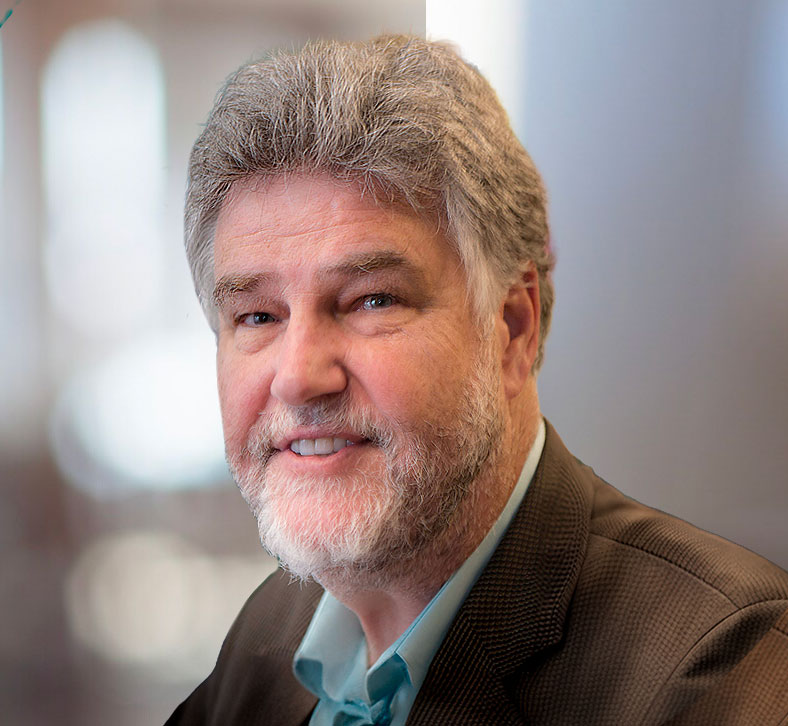
Dr. Campbell is an internationally known expert in fusion, high-energy-density physics, high-power lasers and their applications, and advanced energy technologies including Generation IV nuclear fission reactors and biofuels. He has won numerous awards including the Department of Energy's E. O. Lawrence Award, the American Nuclear Society's Edward Teller Award, the American Physical Society's John Dawson Award (twice), the Department of Energy's Excellence in Weapons Research Award, and the Leadership and Distinguished Career Awards of Fusion Power Associates. He has received an honorary doctorate from the University of Rochester in 2024 for his contributions to the University and fusion and plasma science. He is a Fellow of the American Physical Society and Optica. He has published 185 articles in scientific journals and holds four patents including the design of the first laboratory x-ray laser. He has given numerous invited and plenary talks at both national and international conferences. He is the originator of the Inertial Fusion Science and Applications Conference. He has recently been elected as President of Fusion Power Associates.
Dr. Campbell has been a member of numerous committees providing advice and strategy, including the National Academy of Sciences, Los Alamos National Laboratory, Berkeley National Laboratory, University of Texas, the National Research Council of Canada, Lawrence Livermore National Laboratory, University of Rochester, Lockheed Martin Corporation and the Missile Defense Agency. He served on the Board of Evans and Sutherland Corporation and has worked in various scientific and leadership positions at federal laboratories, universities and the private sector including Lawrence Livermore National Laboratory where he was Associate Director for Lasers, General Atomics where he as Senior Vice President for Energy, Logos Technologies, Sandia National Laboratories, and the University of Rochester. Campbell made major contributions in developing the physics, mission and technology base for the National Ignition Facility (NIF) and was responsible for securing the initial funding from the DOE for NIF. Campbell retired in April 2022 from the University of Rochester where he was the Director of the Laboratory for Laser Energetics and now consults with a focus on fission energy, fusion and high power lasers and their applications. He has received his degrees from the University of Pennsylvania, Princeton University, and the University of Western Sydney. Campbell is also an Adjunct Professor at University of Nevada-Reno and is a Professor in Residence at the University of California-San Diego (UCSD) and is co-director of the newly established Institute of Fusion Engineering at UCSD
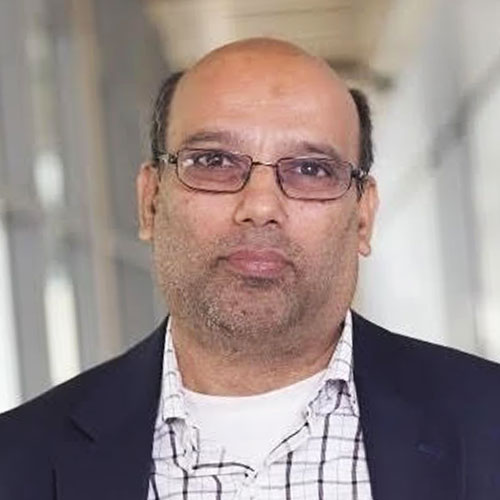
Farhat Beg is a Shao-Chi and Lily Lin Chancellor’s Endowed Chair in Engineering Science at the Department of Mechanical and Aerospace Engineering. His expertise are in the field of laser plasma interaction, inertial fusion energy, pulsed power-driven X- and Z-pinches, and neutron sources.
He has published over 300 papers in refereed journals, including Nature, Nature Physics, Nature Photonics and Physical Review Letters, with total citations exceeding 10,000 with an H-index of 52, according to the Web of Science. He is a fellow of the American Physical Society, Institute of Electrical and Electronics Engineers (IEEE) and the American Association for the Advancement of Science.
He is the winner of the Department of Junior Faculty Award (2005) and IEEE Early Career Award (2008). He is the recipient of the Plasma Science and Applications Committee (PSAC) Award by the IEEE in 2021 for his outstanding contributions on both laser and Z-pinch-driven plasma physics including energetic particle production, ultra-high magnetic field generation and formation of well diagnosed high energy density plasmas.
He was the founding chair of ZNetUS consortium, which is a users group for the pulsed power community. He is the senior editor of the IEEE Transaction on Plasma Science.
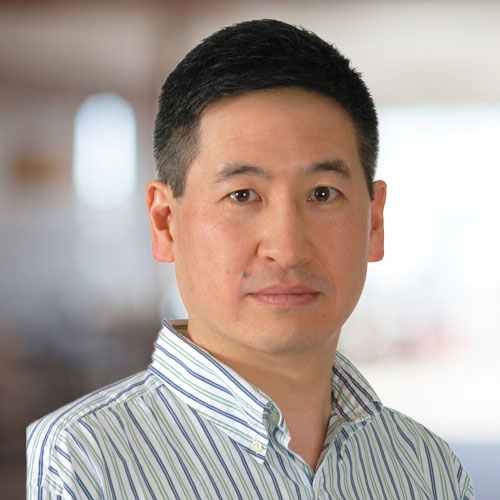
Jonathan Feng is a Distinguished Professor of Physics and Astronomy at University of California, Irvine. His research spans topics in particle and astroparticle physics, and he is known as a central figure in the theoretical study of particle dark matter and searches for new phenomena. In recent years, he has also founded and led the Forward Search Experiment (FASER), an experiment at the Large Hadron Collider at CERN, the world’s highest energy particle collider.
Feng received degrees in physics and mathematics from Harvard, Cambridge, and Stanford. He joined the UC Irvine faculty in 2002 and became Professor and Chancellor’s Fellow in 2006. Feng’s research has been supported by awards from the National Science, Sloan, Guggenheim, Heising-Simons and Simons Foundations, and he has been editor-in-chief and editor of the journals Open Physics, Nuclear Physics B, and Physics Reports.
Feng has served in advisory roles for the National Science Foundation, the Department of Energy, NASA, the Kavli Institute for Theoretical Physics, and the Heising-Simons Foundation, as well as for the science funding agencies of Canada, the European Union, Hong Kong, Israel, the Netherlands, Switzerland, Taiwan, and the United Kingdom.
In addition to research, Feng has been recognized by awards for his teaching of both undergraduate and graduate students at UC Irvine, and has mentored many students and postdoctoral fellows who have done award-winning research under his supervision.
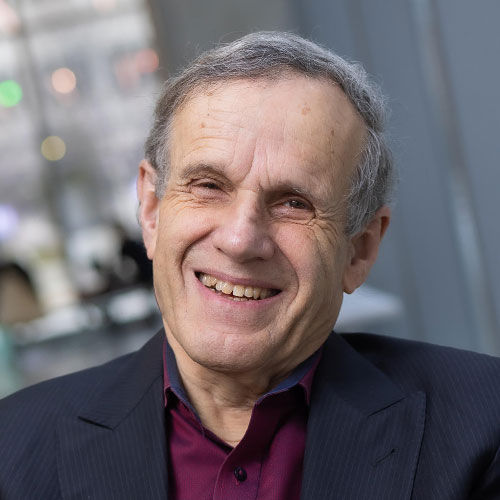
Robert Rosner is a theoretical physicist, on the faculty of the University of Chicago since 1987, where he is the William E. Wrather Distinguished Service Professor in the departments of Astronomy & Astrophysics and Physics, as well as in the Enrico Fermi Institute and the University of Chicago Harris School of Public Policy. Most of his scientific work has been related to fluid dynamics and plasma physics problems, as well as in applied mathematics and computational physics, especially in the development of modern high-performance computer simulation tools, with a particular interest in complex systems (ranging from astrophysical systems to nuclear fission reactors).
Within the past few years, he has been increasingly involved in energy technologies, and in the public policy issues that relate to the development and deployment of various energy production and consumption technologies, including especially nuclear energy, the electrification of transport, and energy use in urban environments.
He is the founding co-director of the Energy Policy Institute at the University of Chicago (EPIC), located at the University of Chicago Harris School of Public Policy and Booth School of Business.
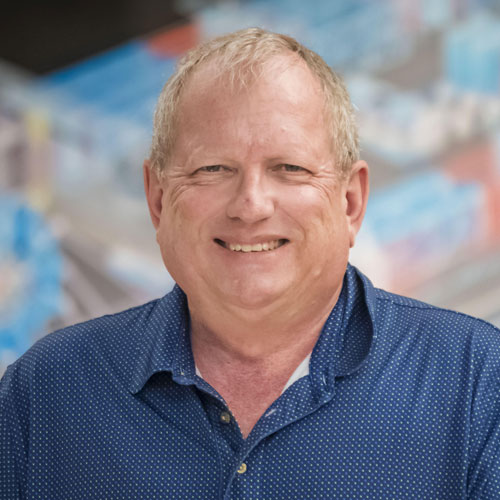
Dr. Rick Spielman was a student in the Department of Applied Science at the Lawrence Livermore National Laboratory and UC Davis. He received his Ph.D. in Plasma Physics from the University of California, Davis, in 1978, where he was a Chancellor’s Fellow and a Regent’s Fellow. Moving to Sandia National Laboratories in 1979, he was first a Member of the Technical Staff, then a Principal Member of the Technical Staff, and finally a Distinguished Member of the Technical Staff. He was the Chief Scientist and Project Manager at Sandia for the successful Z Machine – the most powerful pulsed-power driver in the world. In 1999, he was promoted to be the Manager of the Pulsed Power Research Department in the Pulsed Power Center at Sandia. From 2001-2012, he worked in start-up companies including I-Pulse Inc. From 2005-2012 he was the Vice President of Pulsed Power of Ktech Corporation. In 2013, he joined Idaho State University where he was a Professor of Physics and Director of the Idaho Accelerator Center. He then joined the University of Rochester, Laboratory for Laser Energetics as a Senior Scientist and a Research Professor of Physics in 2019-2025.
Dr. Spielman remains part of the Sandia National Laboratories design team for Z Upgrade and the Next Generation Pulsed Power (NGPP) facility. He led the University of Rochester/LLE program for short-pulse laser lethality for the US DoD. He consults for several private companies on pulsed-power technology development. He is on the Science Advisory Boards for First Light Fusion, Magneto-Inertial Fusion Technologies, Inc., and xCimer.
He has authored or co-authored more than 250 refereed papers and presented more than 10 invited talks at prestigious conferences. His work has been cited more than 7000 times (in the top 1%) and he has a Google H-index of 45. In 2023, Dr. Spielman won the IEEE Erwin Marx award for career contributions and excellence in the field of high-voltage pulsed power. Since 1981 there have been only 22 winners of the Marx award.
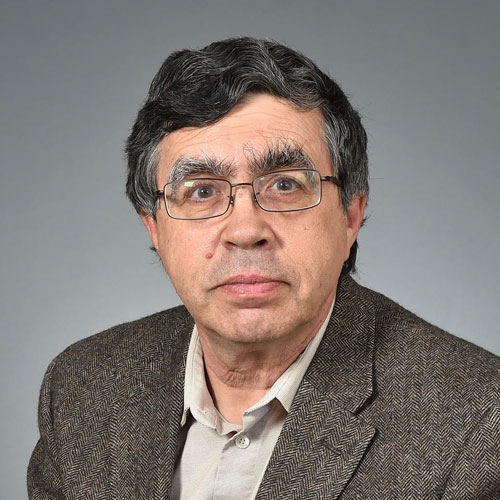
After earning an M.S. in Physics from Moscow State University (1974), a Ph.D. from the Kapitsa Institute for Physical Problems in Moscow (1978), and the advanced degree of a Doctor of Science from the Institute of High Current Electronics in Tomsk, Russia (1991), Dr. Velikovich moved from Russia to the U.S.
He joined the U.S. Naval Research Laboratory in Washington, DC, in 1993, progressing from a contractor with Science Applications International Corporation and Berkeley Research Associates to federal Research Physicist (1999). The U.S. Navy appointed him to the senior executive rank position of Senior Scientist (2017), which he held until his retirement in 2025.
Dr. Velikovich is the sole recipient of the IEEE 2015 Plasma Science and Applications Award and the 2014 NRL-Edison Sigma Xi Award for Pure Science, and a co-recipient of the 2010 DOE Defense Programs Award of Excellence. He was elected a Fellow of the American Physical Society in 2005 and named APS Outstanding Referee for 2025.
Dr. Velikovich co-authored a book titled “Physics of Shock Waves in Gases and Plasmas” (Springer, Heidelberg, 1986) with Prof. M. A. Liberman and authored or co-authored over 200 journal publications in areas including plasma physics, inertial confinement fusion, hydrodynamics, shock waves, nonlinear optics, and quantum electronics.